

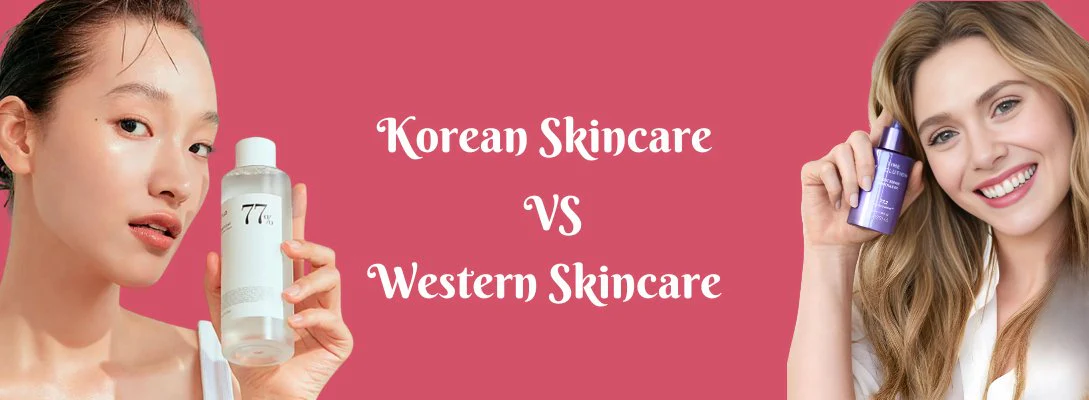
Korean Skin Care vs Western Skin Care — Who Wins?
- December 7, 2025
- 1 Like
- 614 Views
- 0 Comments
When it comes to achieving healthy, glowing skin, two giants dominate the global skincare world: Korean skin care (K-Beauty) and Western skin care. Each follows a different philosophy, uses different ingredients, and offers unique benefits. But the question many people ask is: Which one is truly better — and who wins?
Let’s break it down in a simple, dermatologist-approved way so you can choose what fits your skin best.
Korean Skin Care: Hydration, Prevention & Gentle Care
Korean products tend to focus on maintaining a healthy skin barrier and hydration to give glowing luminous skin. K-Beauty is famous worldwide for its glass skin, multi-step routines, and gentle but effective formulas. The core idea is prevention over correction.
Key Features of Korean Skin Care
- Multi-step routines (toner, essence, serum, ampoule, moisturizer)
- Focus on hydration – watery layers, humectants, snail mucin, hyaluronic acid
- Gentle exfoliation – PHAs, low-strength AHAs/BHAs
- Innovative ingredients – cica, ginseng, rice water, fermented extracts
- Lightweight textures ideal for oily, combination, and sensitive skin
- Daily sunscreen culture (K-SPF textures are lighter, more elegant)
K-Beauty focuses on calming and soothing products. Ingredients like centella asiatica, beta glucan, adenosine, snail mucin, ginseng extract and ceramides are all very popular in South Korean formulations.
Who benefits the most?
People with sensitive, dehydrated, oily acne-prone, and younger skin types tend to love K-Beauty for its light, non-irritating, barrier-friendly approach.
Western Skin Care: Active Ingredients & Corrective Treatments
Western skincare — especially from the US and Europe — is more clinical, targeted, and results-driven.
Western skincare practices focus heavily on actives such as vitamin C, acids and retinols – which no doubt give great results but will often, result in irritation and inflammation if overused. More recently, Korean have also formulated these ingredients but in a gentler formulation, so for patients starting out with these actives they are a great place to start.
Key Features of Western Skin Care
- Stronger active ingredients – retinoids, benzoyl peroxide, high-strength acids
- Science-backed formulations – peptides, ceramides, niacinamide
- Focus on quick correction of acne, pigmentation, wrinkles
- Simple 3–4 step routines
- Medical-grade options available through dermatologists
Who benefits the most?
People with acne, melasma, pigmentation, textured skin, and aging concerns often respond best to Western, ingredients-focused routines.
K-Beauty vs Western Skin Care: Side-by-Side Comparison
| Category | Korean Skin Care | Western Skin Care |
| Philosophy | Prevention, hydration, gentle care | reatment, correction, fast results |
| Texture | Lightweight, watery, layered | Creamy, potent, often thicker |
| Ingredients | Snail mucin, ginseng, cica, fermented extracts | Retinoids, vitamin C, peptides, acids |
| Routine | 5–10 steps | 3–5 steps |
| Best For | Sensitive, oily, dehydrated skin | cne, pigmentation, aging, rough texture |
| Cost | Affordable & accessible | Varies; medical-grade can be expensive |
Which Is Better — Who Wins?
The truth is: neither wins universally. Your skin decides the winner.
Choose Korean skin care if you want:
- A smooth, glowing, hydrated look
- Gentle formulas
- Barrier-friendly products
- Lightweight textures
- Prevention-focused routine
Choose Western skin care if you want:
- Fast, visible correction
- Strong anti-aging results
- Effective acne control
- Pigmentation treatment
- Dermatologist-backed actives
Best Approach: Combine Both
Dermatologists worldwide now recommend a hybrid routine:
Korean routines for hydration + Western actives for correction.
Example:
- K-Beauty essence + Western retinoid
- Korean sunscreen + Western vitamin C
- Korean cica cream + Western exfoliating acids
- This combination gives radiance, long-term health, and strong results.
Final Verdict
As the saying goes, ‘prevention is better than cure’, and this holds true when it comes to skincare as well. In this regard, Korean skincare wins out. With that said, many Western skincare products are now also encompassing a more preventative approach.
So, there is no single winner — but there is a winning strategy:
Use the gentleness of Korean skin care and the power of Western skin care together. Together with this balanced approach you can maintain your skin hydrated, protected, effectively treated and glowing.
FAQ Section
1. Is Korean skin care better than Western skin care?
Not always. Korean skin care is gentler and focuses on hydration and prevention, while Western skin care is stronger and more treatment-focused. The best choice depends on your skin type and concerns.
2. Can I mix Korean and Western skincare products?
Yes, and dermatologists often recommend it. Use Korean products for hydration and barrier support, and Western actives for acne, pigmentation, and anti-aging.
3. Why is Korean skin care so popular?
Korean skin care gained popularity due to its lightweight textures, innovative ingredients like snail mucin and cica, and affordable pricing. It’s effective while being gentle on the skin.
4. Is Western skin care stronger than Korean skin care?
Typically, yes. Western brands use stronger ingredients like retinoids, benzoyl peroxide, and potent acids, making them effective for acne and anti-aging but sometimes irritating.
5. Which is better for acne — Korean or Western skin care?
Western skin care usually wins for acne due to stronger actives like salicylic acid, tretinoin, and benzoyl peroxide. However, Korean skin care can help soothe inflammation and repair the barrier.
6. Which is better for glowing skin — Korean or Western skin care?
Korean skin care tends to give a quicker glow because of hydrating essences, lightweight layers, and brightening ingredients like rice water and ginseng.
7. Is Korean sunscreen better than Western sunscreen?
Korean sunscreens are often preferred for their lightweight finish and no white cast, while Western sunscreens may offer stronger broad-spectrum protection depending on formulations.


Leave Your Comment