

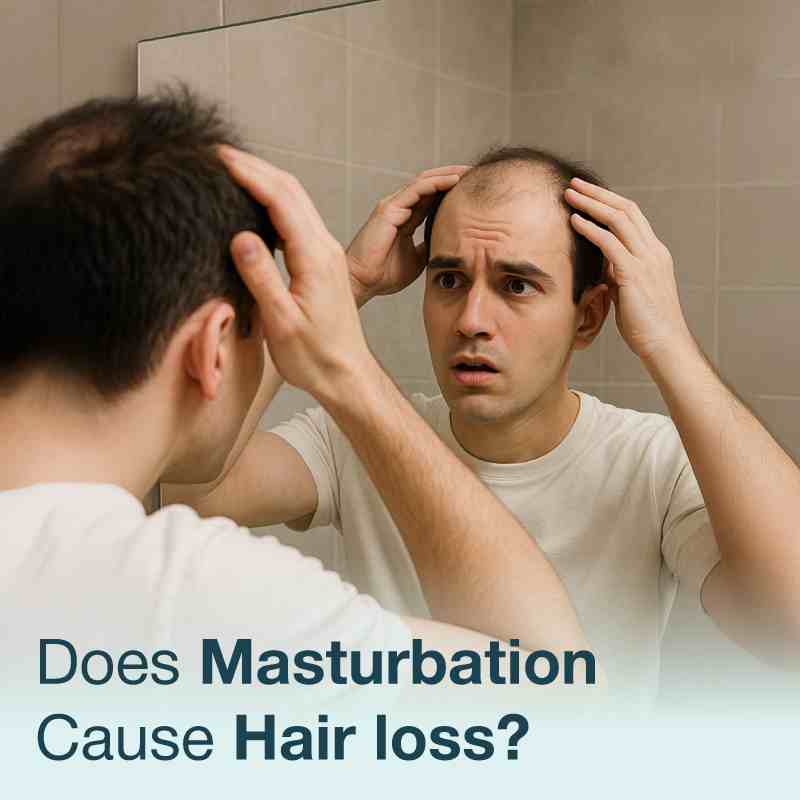
Does Masturbation Cause Hair Loss? Dermatologists Reveal the Truth
- December 16, 2025
- 0 Likes
- 2648 Views
- 0 Comments
Hair loss is a major concern worldwide, and masturbation is frequently (and incorrectly) blamed as a cause—especially across South Asia. This article critically examines the scientific evidence behind the belief that masturbation causes hair loss. We review hormonal pathways, nutritional factors, psychological stress, and real causes of alopecia to provide a clear, evidence-based conclusion for patients and clinicians.
Introduction
Does masturbation cause hair loss?
This question remains one of the most searched sexual health myths on Google, Reddit, and YouTube. Despite widespread belief, modern dermatology and endocrinology do not support a causal relationship between masturbation and hair loss.
Understanding why this myth persists—and what actually causes hair thinning—is essential for patient education and mental well-being.
The Origin of the Masturbation–Hair Loss Myth
The misconception largely stems from:
- Cultural stigma around sexual activity
- Misinterpretation of semen loss as nutrient depletion
- Association of sexual activity with testosterone changes
Historically, masturbation was blamed for acne, weakness, memory loss—and baldness—none of which are supported by science.
Hormones: Testosterone, DHT, and Hair Loss
Does Masturbation Increase Testosterone?
Research shows:
- Masturbation causes temporary, minimal hormonal fluctuation
- No sustained increase in testosterone or DHT
- Levels return to baseline within hours
Role of DHT in Hair Loss
Hair loss (androgenetic alopecia) is driven by:
- Genetic sensitivity of hair follicles to DHT
- Not by sexual activity or ejaculation frequency
👉 Key fact: Masturbation does not increase scalp DHT levels.
Nutritional Loss Myth: Is Semen “Wasting Nutrients”?
Semen contains trace amounts of:
- Zinc
- Protein
- Vitamins
However:
- The nutritional loss from ejaculation is biologically insignificant
- Daily diet easily replaces these nutrients
- No studies show chronic masturbation causes deficiency-related alopecia
Stress, Guilt, and Perceived Hair Loss
While masturbation does not cause hair loss, psychological stress associated with guilt or anxiety may:
- Trigger telogen effluvium
- Worsen existing hair shedding
- Increase scalp inflammation indirectly
This is stress-mediated, not sexual activity-mediated.
What Actually Causes Hair Loss?
Clinically proven causes include:
- Androgenetic alopecia (genes + DHT)
- Telogen effluvium (stress, illness)
- Nutritional deficiencies (iron, B12, vitamin D)
- Thyroid disorders
- Autoimmune diseases (alopecia areata)
- Certain medications
Evidence from Medical Research
Major dermatology associations—including the American Academy of Dermatology (AAD)—state:
There is no scientific evidence linking masturbation or sexual activity to hair loss.
No peer-reviewed study has demonstrated:
- Increased alopecia prevalence in individuals who masturbate
- Dose-response relationship between ejaculation frequency and hair thinning
Clinical Perspective (Dermatologist’s View)
From a dermatological standpoint:
- Masturbation is a normal physiological activity
- Hair follicles respond to genes, hormones, and health, not morality
- Counseling is often required to relieve sexual health anxiety, not prescribe hair medication
Conclusion
Masturbation does not cause hair loss.
The belief is a myth reinforced by cultural misinformation and sexual stigma. Hair loss is a medical condition with well-defined causes that deserve proper diagnosis and evidence-based treatment—not fear or shame.
FAQs Masturbation & Hair Loss
Q1. Can frequent masturbation cause hair fall?
No. There is no scientific evidence linking masturbation frequency to hair loss.
Q2. Does semen loss reduce hair growth?
No. Semen loss does not cause nutritional deficiency or affect hair follicles.
Q3. Does masturbation increase DHT levels?
No. Masturbation does not cause sustained increases in testosterone or DHT.
Q4. Why do people think masturbation causes baldness?
Due to cultural beliefs, misinformation, and outdated medical myths.
Q5. What should I do if I’m losing hair?
Consult a dermatologist for proper diagnosis and evidence-based treatment.


Leave Your Comment